WELCOME
WELCOME TO THE WORLD OF AEROSPACE
WELCOME
WELCOME TO THE WORLD OF AEROSPACE
WELCOME
WELCOME TO THE WORLD OF AEROSPACE
WELCOME
WELCOME TO THE WORLD OF AEROSPACE

WELCOME
WELCOME TO THE WORLD OF AEROSPACE
LATEST BLOGS
Introduction
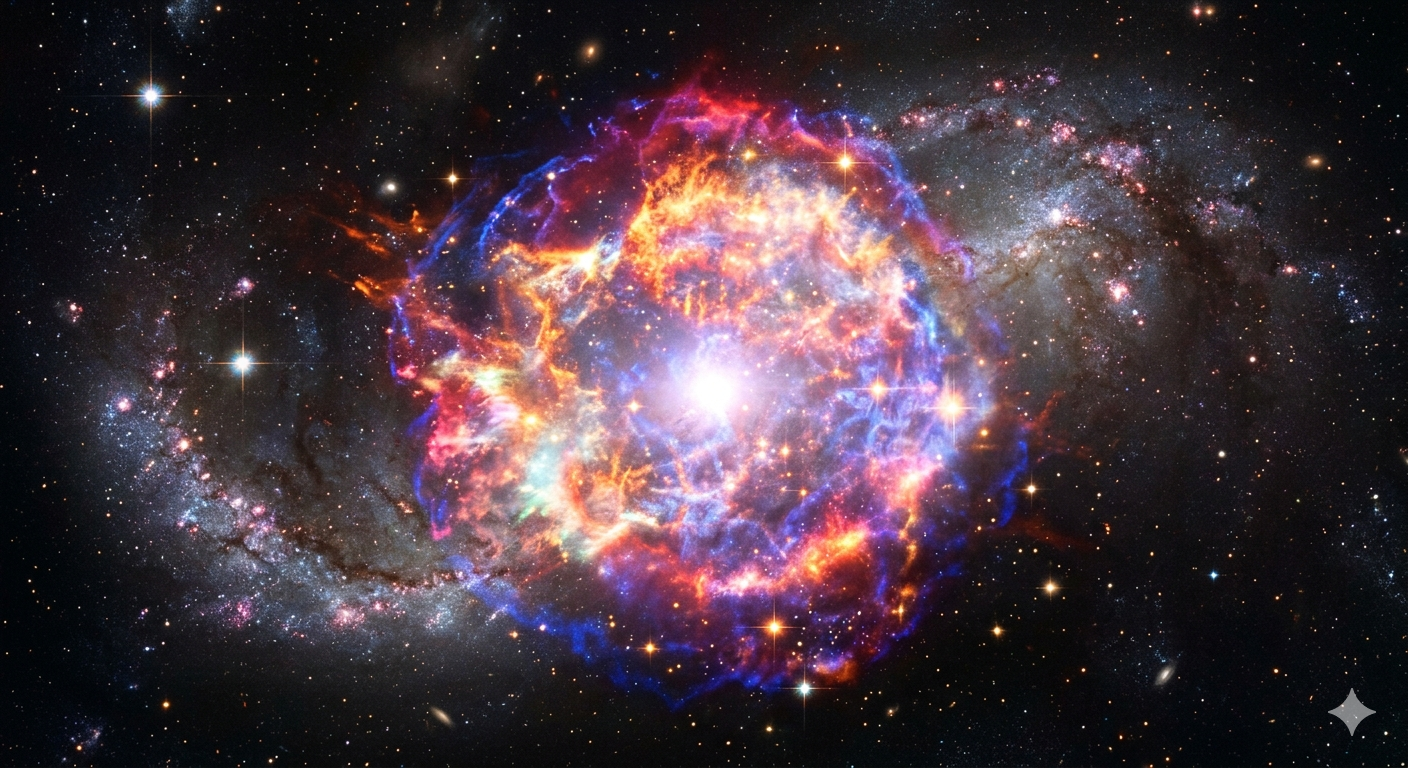
A supernova is one of the most powerful and energetic events in the universe. It marks the violent death of a star, releasing enormous amounts of energy in a short period—sometimes outshining entire galaxies.
Supernovae are not just spectacular cosmic events; they play a crucial role in:
- Creating heavy elements (like iron, gold, uranium)
- Driving galaxy evolution
- Seeding the universe with the building blocks of planets and life
In this blog, we explore the physic...
Extended Kalman Filter (EKF): A Step-by-Step Derivation for Nonlinear Systems
Introduction
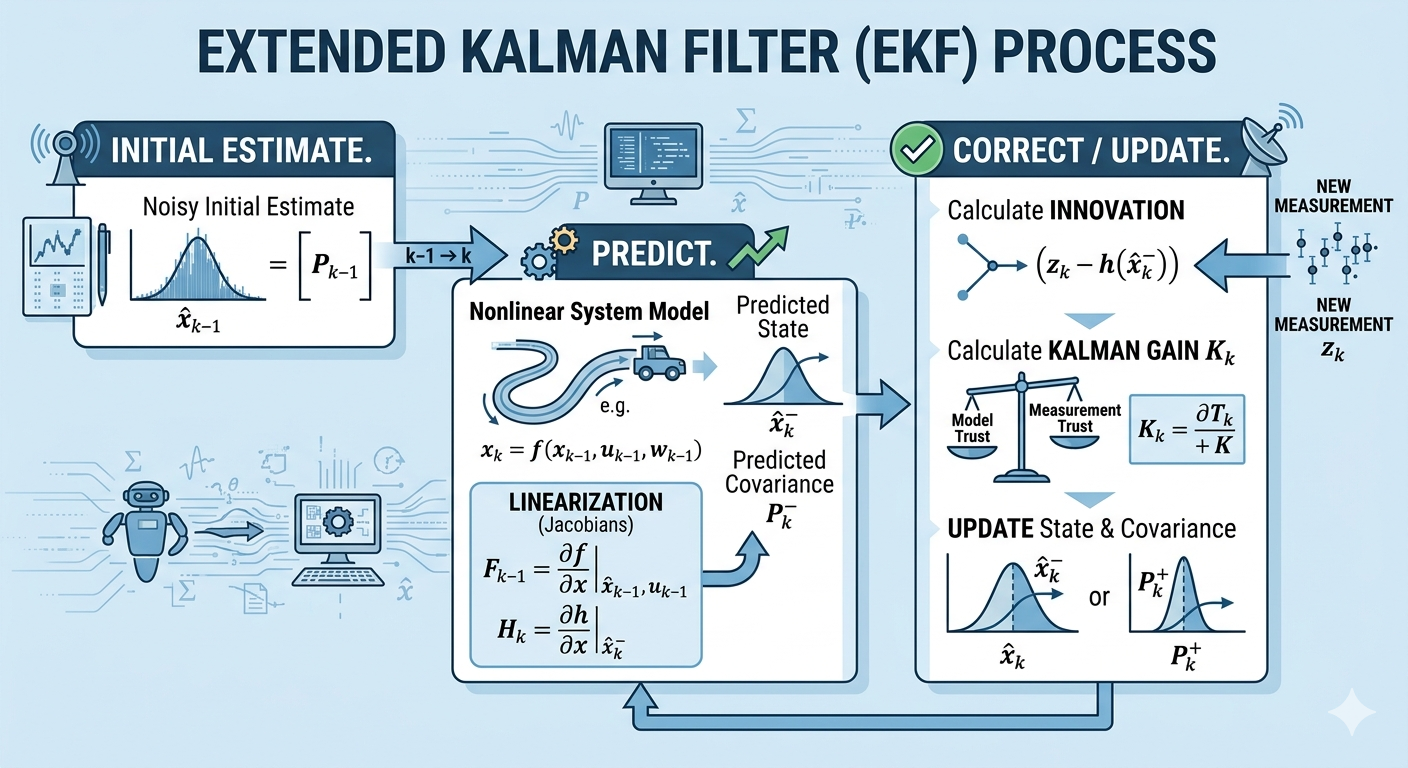
The Kalman Filter works well for linear systems, but real-world systems are often nonlinear. From spacecraft attitude dynamics to robot localization, nonlinearities are unavoidable.
The Extended Kalman Filter (EKF) extends the classical Kalman Filter to handle nonlinear systems by linearizing them around the current estimate.
What is the Extended Kalman Filter?
The EKF is a recursive es...

Introduction
Vector algebra is a fundamental branch of mathematics that underpins physics, engineering, computer science, and countless other fields. Unlike scalars, which represent magnitude alone (e.g., temperature, mass), vectors encapsulate both magnitude and direction, making them ideal for modeling phenomena like velocity, force, and displacement. This comprehensive guide explores vector algebra in depth, covering foundational operations, advanced concepts, real-world applications, and...
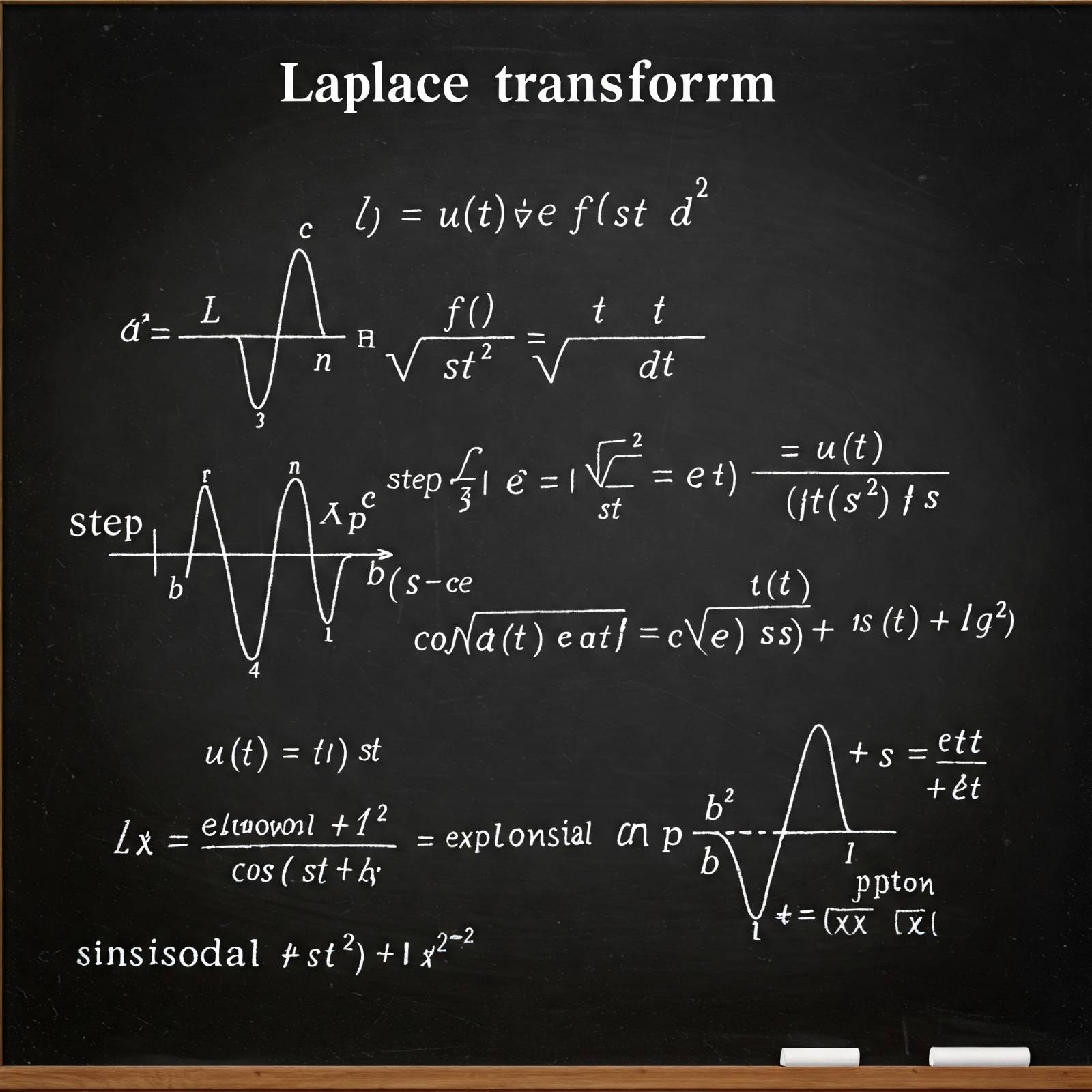
Laplace Transformation is a powerful mathematical tool widely used in engineering, physics, and control systems. It simplifies differential equations into algebraic equations, making them easier to solve. This article delves deeply into its history, principles, applications, and advanced topics.
History of Laplace Transform
The Laplace Transform was named after Pierre-Simon Laplace, an 18th-century French mathematician. Initially developed to solve differential equations in celestial mecha...

Introduction
In aerospace engineering, thermodynamic cycles are the foundation of engine performance analysis and optimization. One of the most critical cycles in this domain is the Brayton Cycle, which describes the operation of gas turbines, jet engines, and modern aircraft propulsion systems. This blog delves deeply into the Brayton Cycle, exploring its stages, principles, equations, and applications in aerospace engineering.
What is the Brayton Cycle?
The Brayton Cycle, named a...

Introduction
Stars, those magnificent celestial bodies that illuminate the cosmos, have finite lifespans. Their evolution is a complex interplay of forces, culminating in a variety of stellar remnants. Among these, the white dwarf stands as a testament to the powerful forces at work within a star. This blog post will delve into the fascinating world of white dwarfs, exploring their formation, properties, and significance in our understanding of stellar evolution.